Token Based Design as… Resistance?
How a family trip to Disneyland’s Galaxy’s Edge inspired the perfect use case for token based identity within a design system.

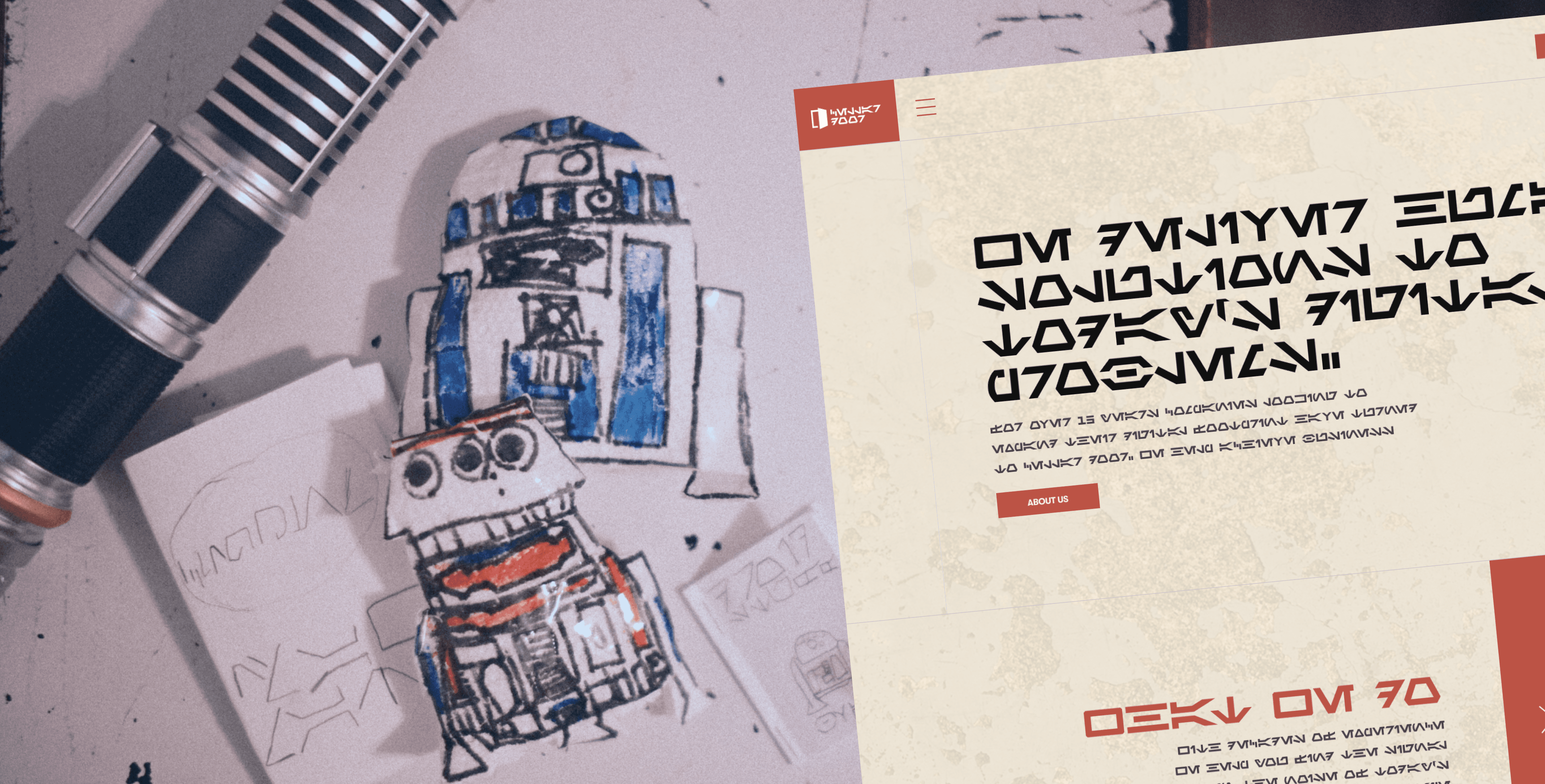
My wife and I took the kids to Galaxy's Edge a few weeks ago. They're 8 and 10, fully in their Star Wars phase, and the thing that grabbed them most was the writing.
Aurebesh on every door, menu, sign. They spent the day decoding it. We got home, printed the alphabet and within about a week the whole family was reading and writing fluently.
I couldn't shake the image when I got back to designing this new site. We'd just finished tightening the Cellar Door design system down to a small set of variables. A font, a few colors, a spacing scale, some section backgrounds. After a few days of staring at Aurebesh, I wanted to know how our site would feel if I just swapped those.
So I did. New typeface. New palette. New backgrounds. About a half a dozen variables changed. We wired it to a keyboard easter egg: type "use the force" anywhere on the site and it flips for thirty seconds. Everything still worked. Two-col blocks still read as two-col blocks. The hero still felt like a hero. The site still felt like ours, even when none of the visible identity was. The blue wasn't doing that work. The font wasn't either.
The real value of a design is this: Identity lives in the tokens. The part of the brand that feels like the brand (color, type, surface) is a thin layer over a much bigger structure of patterns and proportions. When the structure is right, swapping the layer is trivial.
When you build bespoke instead, every page is hand-tuned to its moment. It looks custom and ossifies fast. A new color direction becomes a six-week project. A stakeholder's "what if we tried…" dies in the meeting because the answer is always "we'd have to rebuild half the site."